
How to Answer the Judge's Questions at Your Restraining Order Hearing
Oct 27, 2026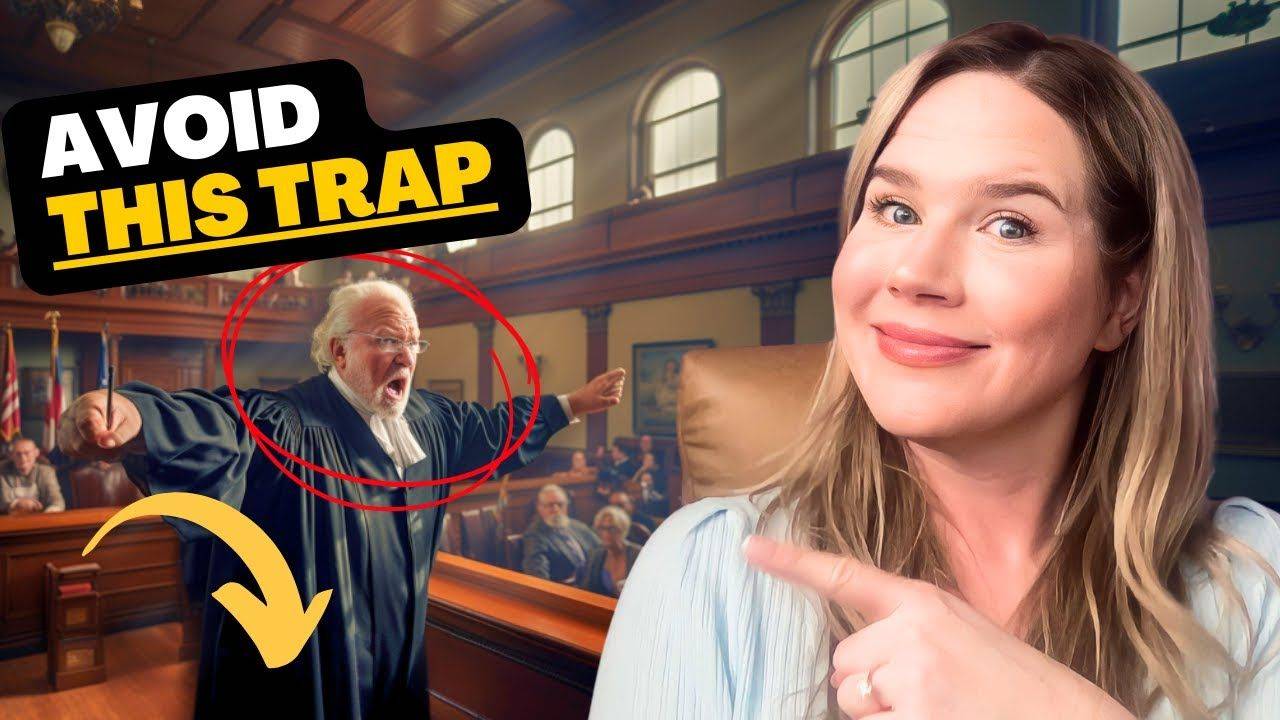
By Veronica T. Barton, California domestic violence defense attorney and creator of DEFEAT the DVRO
The short answer
When the judge asks you a question at your restraining order hearing, stop talking right away, listen harder than you have ever listened to anyone, and think about why the judge is asking. If it is a yes or no question, begin your answer with yes or no. Do not use the question to vent about the other party. If you do not understand the question, say so, and repeat what you think the judge is asking.
Why you need to be ready for the judge's questions
Every single person, whether or not you have an attorney, needs to know how to answer the judge's questions before a restraining order hearing. Judges in these hearings very often ask questions, and unless you are prepared to answer them, you are not prepared for your hearing.
I don't care if you have the best attorney in the world. The judge might ask you questions, and you are the one who has to answer, not your attorney.
When will the judge ask you a question?
You can expect the judge to ask you a question when it is your time to give your side of the story. The petitioner goes first, and while they explain their side, the judge will not ask you, the respondent, to pipe in with your side. You definitely shouldn't do that either. Instead, the question will come while you are explaining something. You may be in the middle of a sentence when the judge asks it.
Step 1: Stop talking and listen
First, close your mouth and stop talking. You cannot interrupt the judge. Don't interrupt the other party either. The judge can interrupt you, and your job is to let the judge do it. The outcome of the restraining order hearing is up to the judge. If the judge has a question, the judge thinks it is more important than whatever you were trying to say, and it is.
You have stopped talking. Now listen more carefully than you have ever listened to anyone in your entire life.
Step 2: Think about why the judge is asking
Listen extremely carefully to what the judge is asking, and then think very quickly about why the judge might be asking this question. Make sure you give the correct response.
The judge wants more details
Maybe there was some sort of physical altercation and the judge wants to slow down, go step by step, and see if your story makes sense.
The judge wants clarification
Perhaps the judge was confused by something you said, or by something the other party said. If they have already testified, the judge may want an explanation from you.
The judge wants a straight, direct answer
Sometimes the judge wants you to confirm or deny the other party's claim. For example, the judge might say, "So you're saying that you've never struck the petitioner, you never pushed the petitioner down, and you don't know how the petitioner got that bruise on her face."
The judge wants to move the case along
Perhaps your testimony is dragging on. Maybe you are talking at length about the history of your relationship, and the judge is thinking, "We have 20 more cases to get to after this." The judge then asks you a question that pushes you far ahead in your timeline, or onto another topic that the judge feels is more important for making a decision.
If this happens, answer the question and do not go back to what you were talking about before. Get to the point. The judge is giving you a clue with the question. Do your very best to pick up on it, because those clues typically make the difference between winning and losing your hearing.
The judge is testing you
Sometimes the judge will ask you a question as a test. Here is an example of how not to answer a question.
Recently I was watching a restraining order hearing while I waited for my case to be called. It was a civil harassment restraining order hearing, one neighbor against the other neighbor. There had been testimony that the petitioner yelled a vulgar insult at the respondent, using the actual words. There had also been testimony that the respondent was sending a lot of emails to the petitioner's landlord, complaining about very petty issues involving the petitioner. This evolved into a dispute.
The judge asked the respondent, "Why do you think that the petitioner would call you that?" He answered the judge, "I think he's not really happy with himself. He lives in a basement apartment, his wife left him, he's not doing well financially." He said it in a much meaner way than I am describing it here.
I was watching the judge's face, and I don't know why the respondent couldn't see it. Anybody watching could see that he was losing with this one answer, right before our very eyes.
The judge was looking for the respondent to say, "Because I sent all those emails. I understand he was probably annoyed that I was sending them. It created a rift between us." If he had said that, he would have had a chance to win.
He didn't say that, and he lost, because he revealed something about himself. The judge explained that he had a lack of insight. He couldn't understand how the situation looked from the outside.
This is not the opportunity to vent about the other party, no matter what the question is.
The judge thinks you were inconsistent
I have seen people lose their hearings because of this too. The judge is asking about something the person said that doesn't match something they said later in their testimony, and is trying to get them to clarify. Sometimes when that happens, there is an explanation. Sometimes there was confusion in the testimony. Sometimes there is a detail that isn't readily apparent and means it is not inconsistent.
Inconsistencies are a red flag. Inconsistencies mean a lie, because when you are telling the truth, you might not remember some details, but most of the details will be the same. The judge is giving you an opportunity to explain. The judge might say, "Why did you write this in your declaration that you submitted to the court when you're saying something different today?"
Use that opportunity to explain. If you were mistaken, you can say, "I think I did remember it better when I wrote the declaration. I'm a little nervous around her. I'm sorry." Then you can get past it.
But if you are obtuse and you don't understand what the judge is asking you, you might squander that opportunity. If you do, the judge will also think you are evasive, and now you have two strikes against you: you are inconsistent and you are evasive.
The judge is challenging you
This is in the category of a test as well. The judge might ask you some hard questions, so be ready.
Step 3: Answer the question that was asked
The judge has asked you a question, and you have immediately stopped talking. You have listened harder than you have ever listened to anything in your whole life, and you have thought about why the judge might be asking. If it is a yes or no question, your answer must begin with yes or no.
There may be some exceptions to this, where you say "that's partially true." If the question can be fully answered with yes or no, you should stop there. If it needs an explanation, that is okay.
I see this all the time: the judge gets impatient, thinks about everything on their calendar and all the cases they have to get through, and gets annoyed. The judge asks a yes or no question, and then the witness goes on and on and on, gets inspired, and starts talking about something else. Sometimes they forget what the question was and say, "I'm sorry, what was the question?" after they have talked for two minutes. No joke, that really happens.
Finally, if you don't understand the question, say, "Your Honor, I'm sorry, I didn't understand the question," and then repeat what you think it is.
Ideally, you have some idea what it is, and you can repeat your understanding of it. That way you are not accidentally answering the wrong question and giving the judge a wrong answer. The judge also does not think you are meandering, going to a different topic, or being evasive when you are not.
I cover preparing and presenting your testimony, and handling being cross-examined, in Step 3 of DEFEAT the DVRO, my course for respondents who represent themselves.
Frequently asked questions
Should I interrupt the judge if I'm in the middle of a sentence?
No, you cannot interrupt the judge. Stop talking and let the judge interrupt you. The judge decides the outcome of the hearing, so if the judge has a question, it matters more than whatever you were saying.
Do I have to answer yes or no?
If the judge asks a yes or no question, your answer must begin with yes or no. If the question can be fully answered that way, stop there. If it needs an explanation, that is okay.
What if I don't understand the judge's question?
Say, "Your Honor, I'm sorry, I didn't understand the question," and then repeat what you think it is. That keeps you from answering the wrong question and looking evasive.
What if the judge asks why the other person is doing this to me?
Treat it as a test. This is not the time to vent about the other party. The judge is looking for insight into how the situation looks from the outside.
Where this fits in DEFEAT the DVRO
You can keep binge-watching YouTube, hoping to find answers on how to win your restraining order hearing, or you can have them handed to you, which is exactly what I do in my course, DEFEAT the DVRO. It is a self-paced video course for respondents who plan to represent themselves. Step 3, "Prepare to Tell the Judge Your Story," covers preparing your testimony, presenting it, and handling being cross-examined, and the full course has 25 short lessons in 6 steps plus a fill-in Respondent Workbook.
If you have a restraining order hearing coming up, take the free first class. You have nothing to lose. It is 19 minutes, with no credit card required. The full course is $596, or 4 payments of $149 with Klarna, with lifetime access and a 48-hour money-back guarantee.
Start the free class at defeatthedvro.com
This post is educational and is not legal advice. Reading it does not create an attorney-client relationship.